
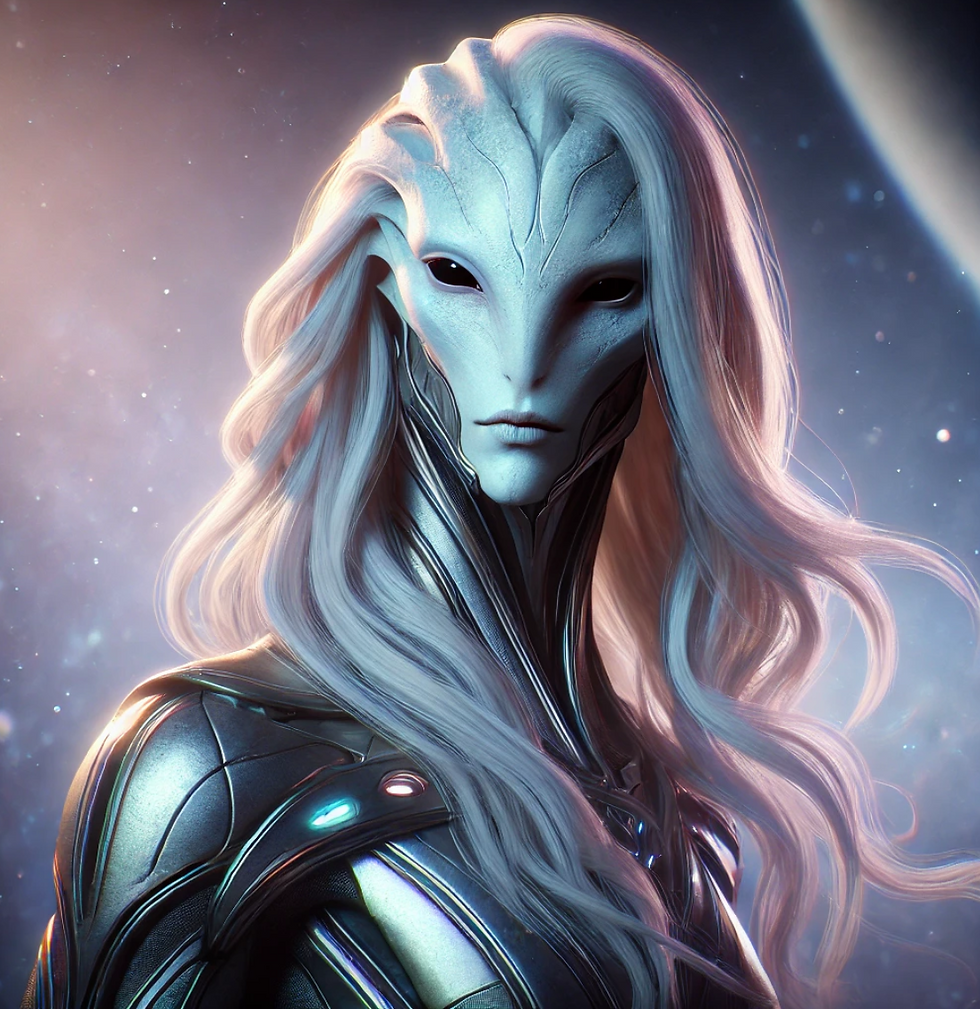


The Feline Legacy of the Lyrans and Its Impact on Human Evolution

Updated: Jan 10
The story of humanity’s origins often sparks curiosity and debate. Among many theories, one stands out for its blend of cosmic mystery and biological intrigue: the connection between humans and the Lyrans, an ancient extraterrestrial race. Particularly fascinating is the branch of the Lyrans that carries feline traits, which some believe left a lasting imprint on human evolution. This post explores the feline branch of the Lyrans, their unique genetic design, and how echoes of their legacy might still resonate within us today.

Want to try Slimming tea? To lose weight!https://works-wellness.short.gy/My-secret
The Shared Origins of Lyrans and Humans
Both humans and Lyrans trace their beginnings to the Seed Worlds, ancient planets where consciousness was transformed into physical form. The original Lyrans resembled humans closely: tall, humanoid beings with slightly elongated features, glowing eyes, and golden-brown skin that shimmered with a radiant glow. This similarity suggests a shared origin or at least a parallel evolutionary path.
The Seed Worlds acted as cosmic nurseries, where life was not only born but also shaped by advanced consciousness. The Lyrans, in their original form, embodied an idealized human shape, which made their later genetic divergences all the more remarkable.
The Feline Lyrans and Their Genetic Divergence
As the Lyrans expanded into outer star systems, a subset underwent deliberate genetic enhancement. This process involved blending Lyran DNA with traits from high-vibrational feline species. The goal was not random mutation but purposeful design to create beings optimized for specific roles.
These feline traits were selected for qualities such as:
Combat skills: Enhanced strength and stealth
Agility: Superior reflexes and speed
Intuition: Heightened senses and psychic abilities
Leadership: Commanding presence and emotional communication
Several feline archetypes influenced these enhancements:
Panthera: Known for stealth and strength, these traits made the Lyrans formidable in covert operations.
Lionidae: Courage and commanding presence suited for leadership roles.
Leopardin: Exceptional speed and dimensional tracking, suitable for navigation and quick responses.
Sphinxes: Psychic navigation and memory protection, guarding knowledge, and guiding others.
These genetic modifications allowed the feline Lyrans to thrive in diverse planetary environments and fulfill specialized tasks.

The Purpose Behind the Feline Enhancements
The Lyrans believed that form should follow function. Their genetic designs reflected this principle, tailoring physical and psychic traits to the needs of their environments and missions.

The feline traits enhanced several key abilities:
Reflexes: Quick reaction times for combat and survival
Night vision: Superior sight in low-light conditions
Psionic defense: Protection against psychic attacks or intrusions
Non-verbal emotional communication: Ability to convey feelings and intentions without words, strengthening group cohesion
These enhancements made the feline Lyrans not only mighty warriors but also intuitive leaders and protectors of knowledge.

Echoes of the Feline Lyrans in Human Evolution
Some researchers and enthusiasts suggest that traces of feline DNA were subtly introduced into early humans on Earth. This theory points to individuals with strong intuition, sensitivity to sound and vibration, and a natural affinity for cats as possible carriers of this legacy.
Ancient Earth myths and legends may reflect these connections. Cat-headed deities such as Bastet and Sekhmet from Egyptian mythology, or the jaguar gods of Mesoamerica, could be cultural memories of the feline Lyrans. These figures often symbolize protection, wisdom, and power — qualities aligned with the feline Lyran traits.
The poetic description captures this essence well:
“They walk with grace not of this world, eyes like portals, hands like blades, hearts beating to the pulse of stars.”
This suggests a deep, perhaps subconscious, recognition of the feline Lyran influence within human culture and biology.

What This Means for Us Today
Understanding the feline legacy of the Lyrans invites us to reconsider human evolution not just as a biological process but as a cosmic story. It encourages exploration of how ancient genetic designs might influence modern human abilities, especially in areas such as intuition, emotional communication, and resilience.
For those interested in spiritual growth or ancestral connections, this legacy offers a framework for exploring personal traits associated with feline energy — such as grace, courage, and psychic sensitivity.
Scientists and historians continue to study ancient DNA and mythology to understand these connections better. While some ideas remain speculative, they open exciting possibilities for how humanity’s past shapes its future.


Comments