
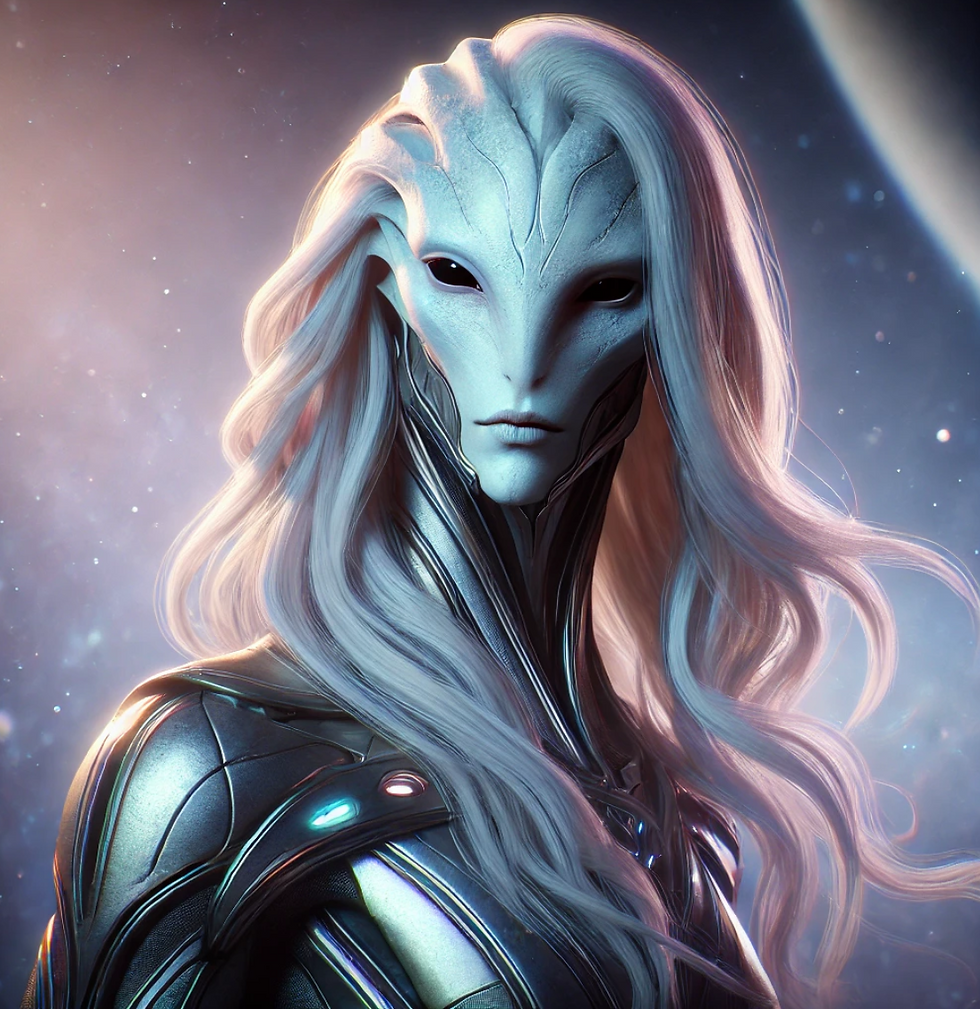


The Forgotten Symphony of Lyrathi: Mars Before the Silence
- oganes karayan
- Jan 13
- 3 min read

Long before Mars became the barren, red world we know today, it was a place of wonder and life beyond imagination. Ten thousand years before the sky was stripped thin and the seas turned to ghosts, Mars was not red. It shimmered copper-blue at dawn and glowed violet at dusk. This was the age of the Lyrathi, a remarkable civilization born from the union of human and feline lineages, blending flesh with star-memory. Their story reveals a lost chapter of Mars, a world alive with oceans, forests, and cities grown from sound and intention.

The Lyrathi: Beings of Flesh and Star-Memory
The Lyrathi were not half-human or half-feline—they were whole beings, complete and unique. Standing tall and lithe, their eyes shone like molten amber, capable of perceiving more than just light. Their faces carried subtle feline features: high cheekbones, softly sloped noses, and a whisper of fur along their temples and spines. Their tails moved with expressive grace, balancing their movements and conveying emotion.
Unlike typical fantasy creatures, the Lyrathi were deeply connected to their environment and the cosmos. Their existence was intertwined with the planet’s magnetic currents and the living energy that flowed between Mars and its sister planet, Tiamat.
Mars as a Living World
Mars once had oceans—not as vast as Earth’s, but deep enough to create a unique ecosystem. Along the shorelines, forests of crystal-veined flora grew, plants that thrived not on sunlight but on magnetic currents. These forests shimmered with colors unseen on Earth, tuned to the planet’s invisible energies.
The Lyrathi did not build cities with tools or machines. Instead, they grew their homes from the land itself. Using harmonic resonance, they shaped terraces of pale stone and bio-metal without leaving scars on the environment. Sound and intention molded their cities, creating structures that blended seamlessly with nature.
This harmony between life and environment challenges modern ideas about civilization and technology. It suggests a world where progress did not mean destruction but coexistence.

The Sister in the Sky: Tiamat and The Silver Veins
Above Mars hung Tiamat, a massive blue-green world wrapped in storms and oceans. Older than Earth and heavy with memory, Tiamat was more than a neighboring planet—it was a living presence. Between Mars and Tiamat flowed invisible corridors of energy known as The Silver Veins, stabilized by ancient technology and living consciousness.
Travel between Mars and Tiamat was not mechanical. The Lyrathi moved through these corridors by attuning themselves to the planetary song. Those who could hear this song walked the Silver Veins, traveling between worlds in a way that defies modern understanding.
This connection between planets hints at a sophisticated knowledge of energy and consciousness, a concept often found in UFO lore and alien mythology. It also raises questions about the origins of life and intelligence in our solar system.
Echoes of a Lost Civilization
The story of the Lyrathi and their living Mars is a powerful reminder of how much has changed. The red planet we see today is silent and barren, but 65 million years ago, it was alive with color, sound, and beings who walked with purpose and grace.
Stories of ALIENS and UFO sightings often spark curiosity about life beyond Earth. The Lyrathi legend adds a layer of depth to these discussions, suggesting that Mars once hosted a civilization that combined the physical and the cosmic in ways we are only beginning to imagine.
For those fascinated by FANTASY worlds and ancient mysteries, the Lyrathi offer a vision of a different kind of existence—one where harmony with nature and the cosmos was not just ideal but real.

What We Can Learn from the Lyrathi
The tale of the Lyrathi challenges us to rethink our relationship with technology, nature, and the universe. Their cities grew without harm, their travel relied on attunement rather than machines, and their lives were deeply connected to planetary energies.
This ancient vision encourages:
Respect for the environment: Building with nature, not against it.
Exploration of consciousness: Understanding energy beyond the physical.
Curiosity about the cosmos: Recognizing that life and intelligence may take forms beyond our current knowledge.
While modern science has yet to confirm the existence of such beings or civilizations, the story of the Lyrathi enriches the dialogue around ALIENS, UFO phenomena, and the possibilities of life on Mars.
Exploring these ideas with an open mind can inspire new ways to think about our place in the universe and the future of planetary exploration.


Comments